
illuminate history
Curiosity: forget “Cherchez la femme” (Look for the woman.) “Cherchez l’histoire.” (Look for the story.)
back to writing about writing…
Aside from the need for inspiration and sufficient skill to create credible, compelling characters, there’s another challenge in writing 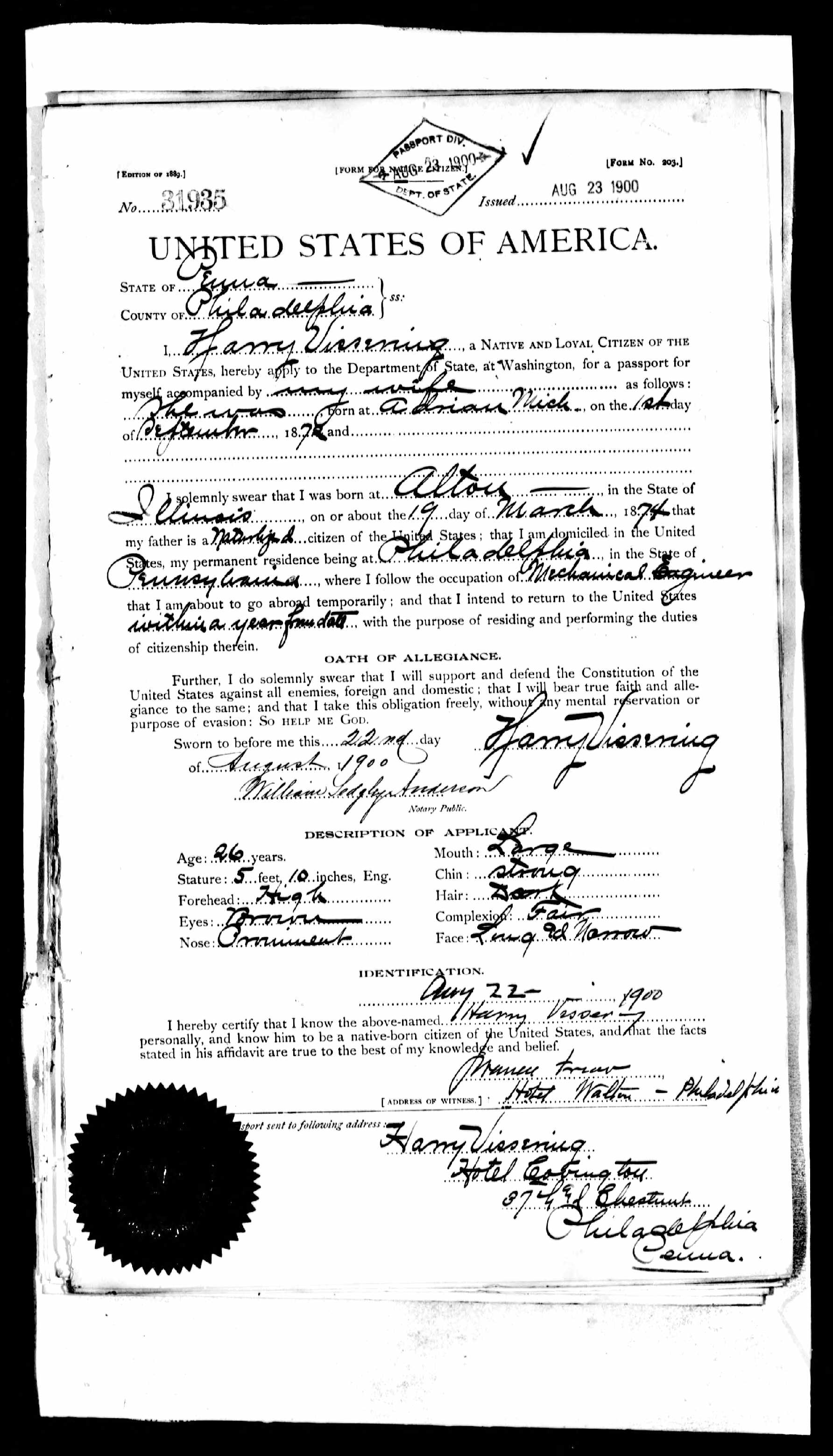 historical fiction: getting the context right in terms of social mores, medical and dental practices, education, dress, means of transportation and even vocabulary. For example, I wondered yesterday whether one of my characters–Edith–would have used the word “travelogue.” I discovered that, indeed, Burton Holmes, a Chicago man who was the first to make a career of giving documentary travel lectures, created the term in 1902 or 1903. As inveterate travelers themselves, Edith–my great aunt–and her husband Harry, who had returned to Chicago by then, might even have attended one of Holmes’ lectures, an innovative combination of travel stories, slide shows, and motion pictures . So, yes, I think ‘travelogue’ is a word she might have used.
As it turns out, my grandmother Emma’s training as a nurse, about which I learned virtually nothing directly from her, is an integral part of the story as I am now telling it. I’ve decided that Edith and Emma became friends long before my grandmother married my grandfather, Edith’s brother–I know, this sort of thing makes your eyes roll back in your head, and that they would have written letters because they lived in different cities, rarely saw each other and everybody wrote letters in those days.
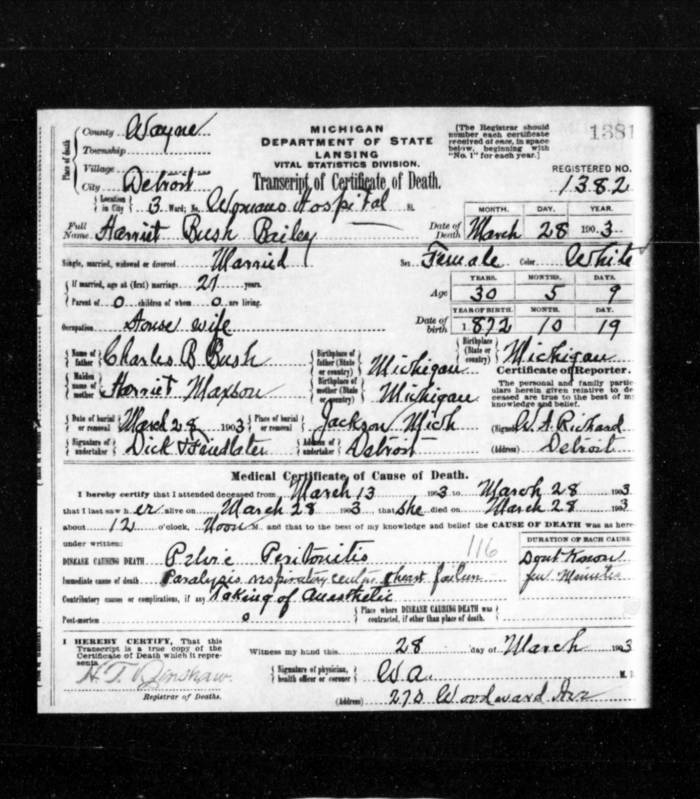
So, Edith would have written to tell Emma of the sudden, tragic death of her brother’s first wife, Harriet, who died at age 30 of appendicitis, according to the newspaper obituary. So, of course, I need to understand how appendicitis was diagnosed and treated in 1903.
I learned, by the way, that the incidence of appendicitis increased about tenfold between 1890 and 1900. An author in Vol. 43 of the Journal of the American Medical Association attributed this increase to the fact that many more people were eating products made from the newly available finely milled flour rather than coarse breads made from traditional whole grain flour and corn meal. Isn’t it odd that we’re still trying to encourage consumption of less-refined food, more than a century later?
Then, on a whim, I googled “Harriet Bush Bailey, Detroit (the city where she died), 1903” and found her death certificate (on a website called ‘Find a Grave’). It turns out that the doctors did perform surgery upon initial diagnosis–which I had learned was the recommended practice–but she died from the effects of the anesthesia.
I’ve long been amazed by the specificity of information I can discover by searching the internet. But something new is happening: sometimes when I search for names of people I am writing about–like my great-grandmother Marguerite de Lance Gregory. When I searched for her in the same way: name, city, year of death–I found links to my own website. Not only that, I was surprised and pleased to find links to a couple of my pieces recently published on other websites: VoiceCatcher and Antique Trader. I submitted the piece to Antique Trader last October and heard nothing until Feb. 12, when editor Karen Knapstein sent me a page proof to review. Besides appearing on line, it’s also in the March 5 print edition of the magazine. Fancy that!
Unfortunately, I did not find a link to Marguerite’s death certificate. I still don’t yet know what she died of, at age 40, in Brooklyn. But I’ll go back to the library soon, and try again with Ancestry.com.
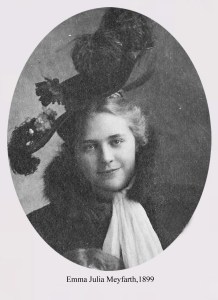
Now, if you’ll excuse me, I must rejoin
Emma and Edith.

 illuminate history
This is all so fascinating! Great sleuthing! Love Emma and Ediths’ hats. Hope the balmy breezes of Hawaii continue to inspire you! See you soon. xo Michelle