
illuminate history
Curiosity: forget “Cherchez la femme” (Look for the woman.) “Cherchez l’histoire.” (Look for the story.)
Istanbul
 Patrick Leigh Fermor, remember him? The young Englishman who hiked from Rotterdam to what he, as student of history, preferred to call Constantinople. That has a certain ring to it–although I think ‘Byzantium’ sounds even more exotic. But I guess that referred to the entire country.
We traveled by bus from Plovdiv, Bulgaria to the border crossing at Erdine, and then on to Istanbul. The closer we got to the border, the more traffic we saw. Trucks entering Turkey were backed up for miles at the border . Fortunately, buses went in a separate lane.
We arrived on October 28, the day before the 91st anniversary of the establishment of the Republic of Turkey by Kemal Ataturk. Banners and flags flew everywhere. Our guide mentioned that, in addition to establishing a secular government, Ataturk established compulsory education. Later, I had a chance to confirm: for girls, too? Yes, was the answer. He also established universal suffrage in 1934. 17 women were elected as MPs in Turkey’s first parliamentary election in 1935.
Unfortunately, Turkey’s current President Erdoğan, although elected on a progressive program, has become regressive and is now advocating return to an Islamic State–with all that implies relative to women’s independence and many other issues.
 We were struck by the remarkable change in apparent economic levels between quiet and rural Bulgaria and Turkey. At the border we entered the bustling exurb of Istanbul. Since we were not there for a political demonstration, we enjoyed the show. The first night, we joined the throngs on Tarlabasi Boulevard–but returned to our hotel for a bite to eat. We became bolder and explored more just a day later.
Reading Fermor, I was reminded of how long the Ottoman Turks held Romania, Bulgaria, Yugoslavia and part of Austria in thrall. They never took Vienna, but it was close. Suddenly, we were in Turkey, where people seem pleasant and friendly. And there, we were reminded, of course, that Anatolia was occupied by the Romans in ~200 BC and for centuries afterward. There was, of course, great conflict between the Eastern and Roman Churches. I think it was The Fourth Crusade that sacked Constantinople and left it vulnerable to takeover by the Ottomans.

Constantine built Hagia Sophia as a cathedral in the 4th century AD. It was destroyed; then rebuilt by Justinian in the 6th century. When the 4th Crusade sacked Constantinople at the beginning of the 13th century, they used Hagia Sophia as a stable.
This conquest of one Christian state by another so weakened the Byzantine Empire that it was soon taken by Sultan Mehmet the Conqueror in 1453. Fortunately, he was impressed with the beauty of the architecture and, rather than destroying it, converted it to a mosque by plastering over all the Christian mosaics, then installing Islamic iconography. Ataturk designated Hagia Sophia as a museum in 1934.
But it wasn’t until 1993 that extensive restoration began. You still see the huge  Arabic medallions installed ~19th century. This perspective is from the Empress’ balcony–women worshiped separate from men in the Eastern Orthodox Church. The Empress actually rode a horse up the ramp to her assigned location.
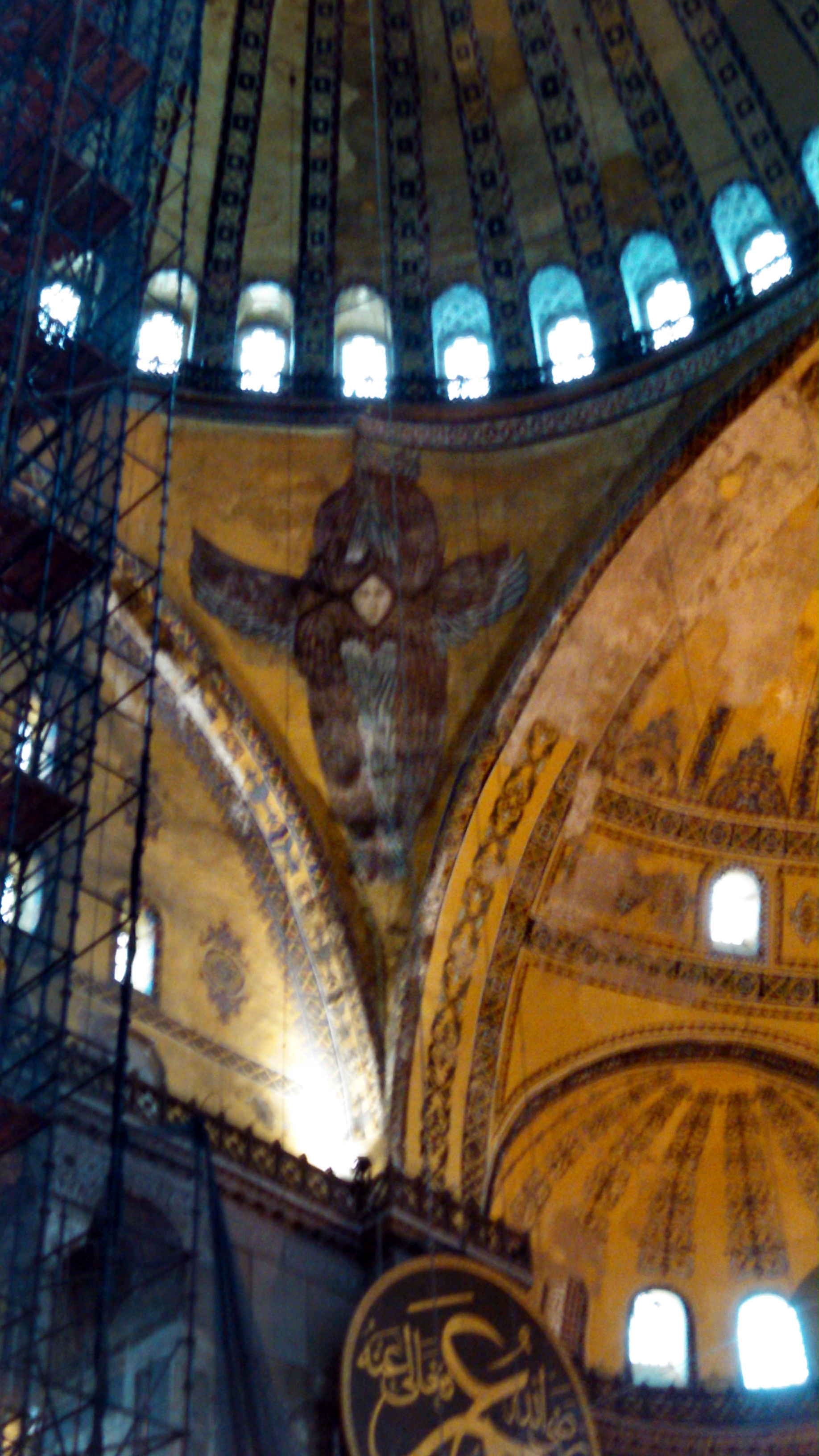
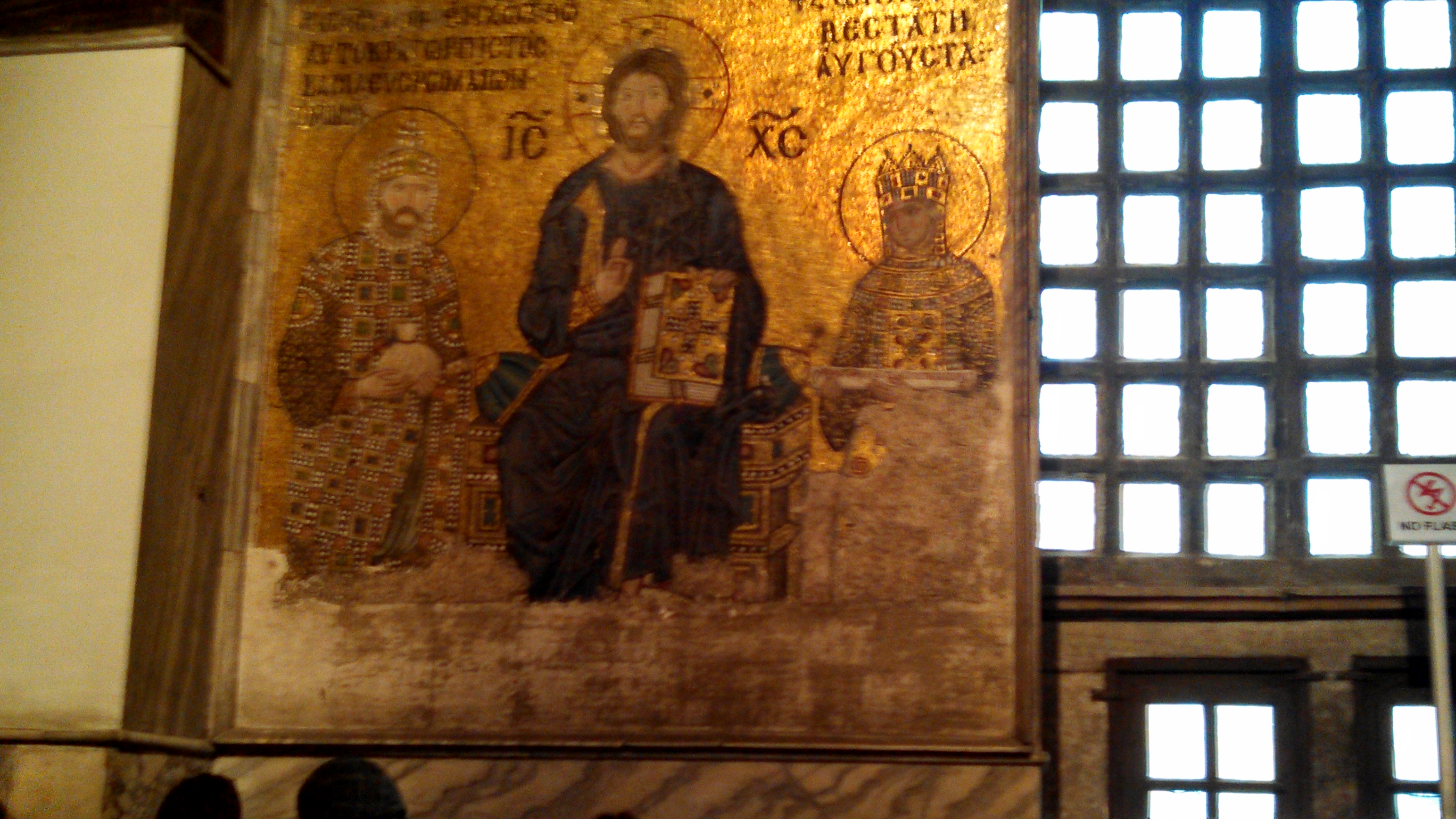
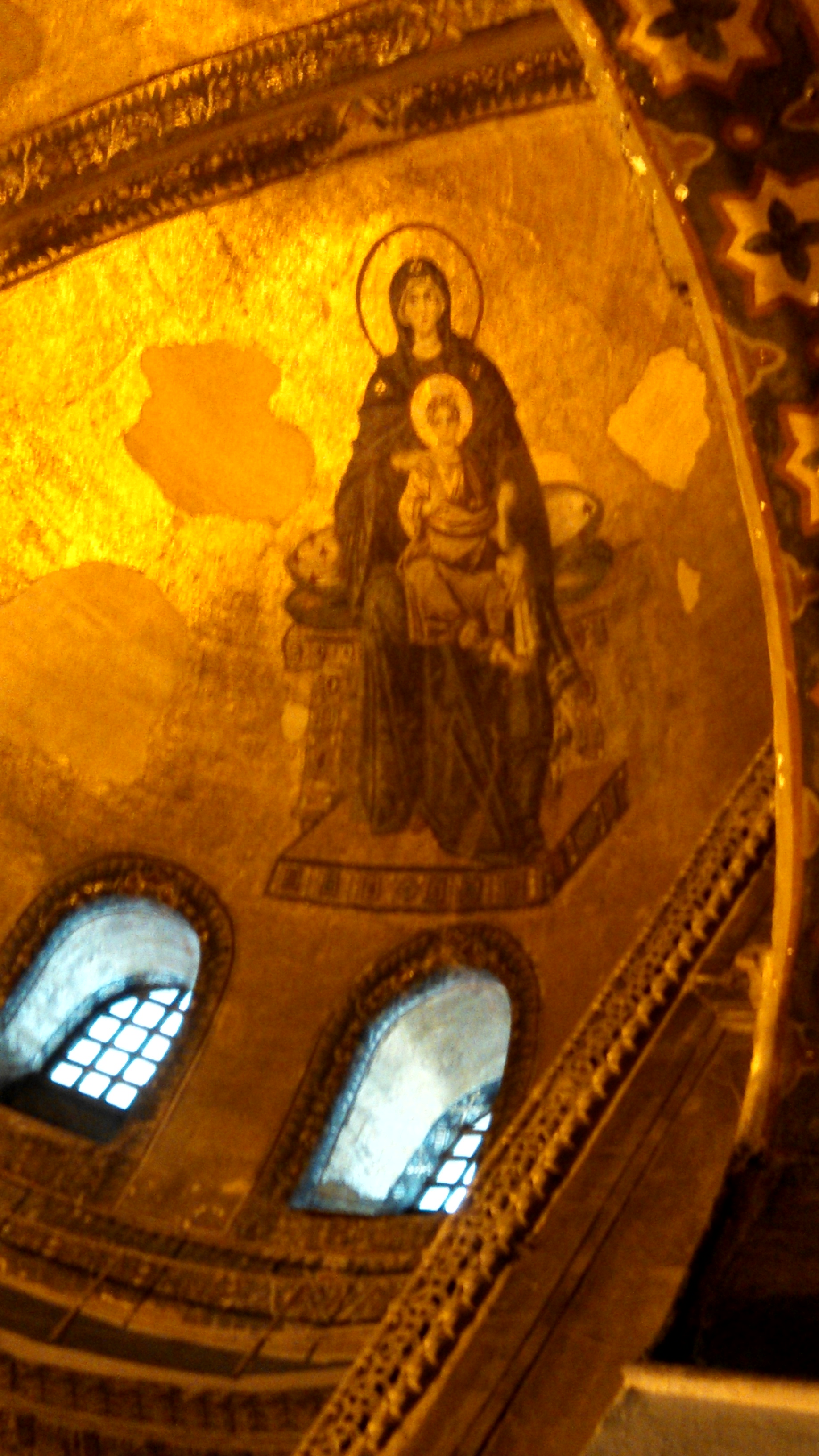 The mosaics–especially from the upper level–are stunning.
 In some ways, all of Istanbul is like a mosaic: so many beautiful structures, some old, some new and some a combination. The picture to the left is one of many community gardens under cultivation next to the ancient Roman Wall.
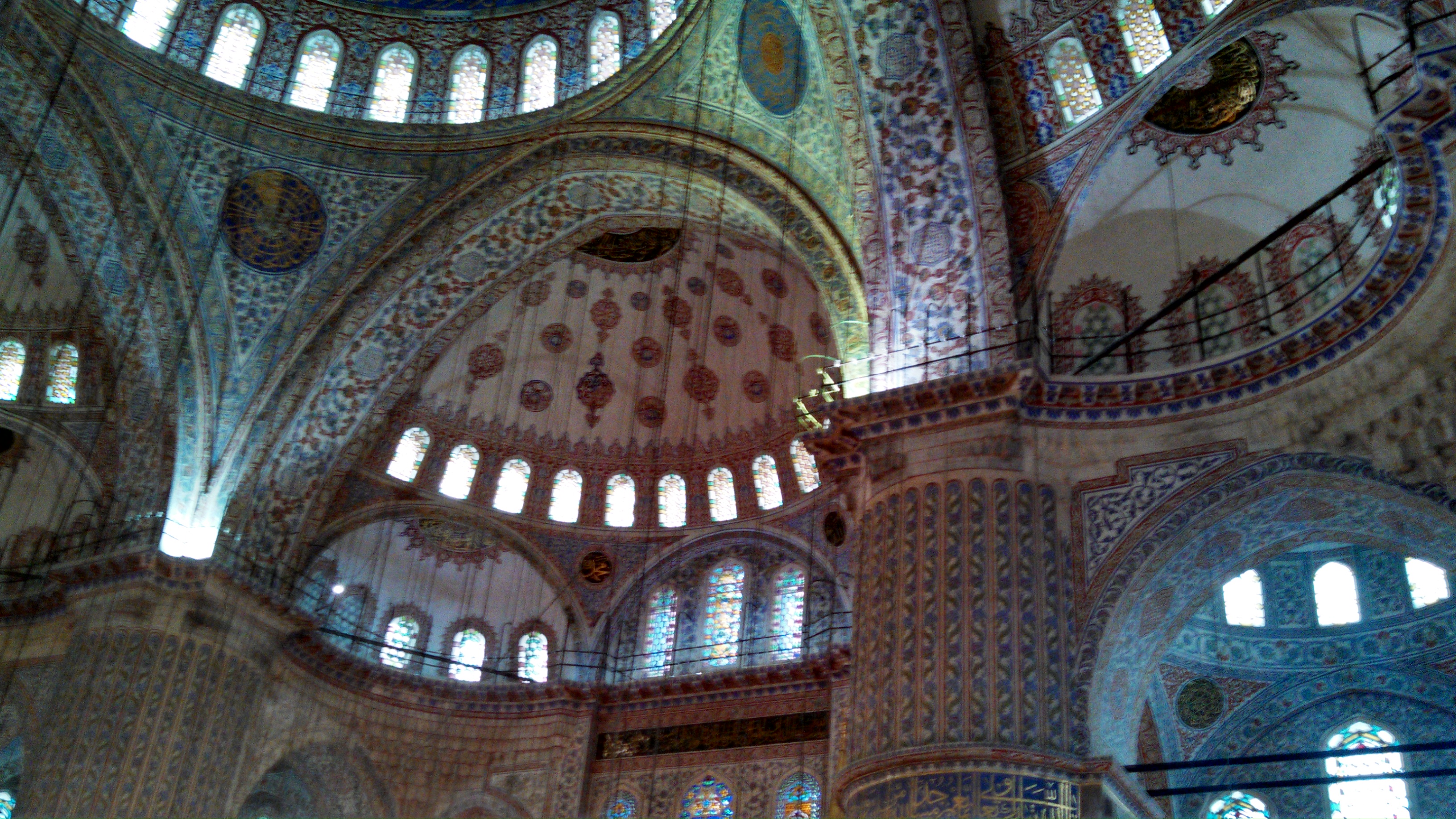
 The Blue Mosque is a place of worship where one must observe conventions. But one focuses mostly on the intricacy of architecture and decoration.
We saw a great deal in three days.
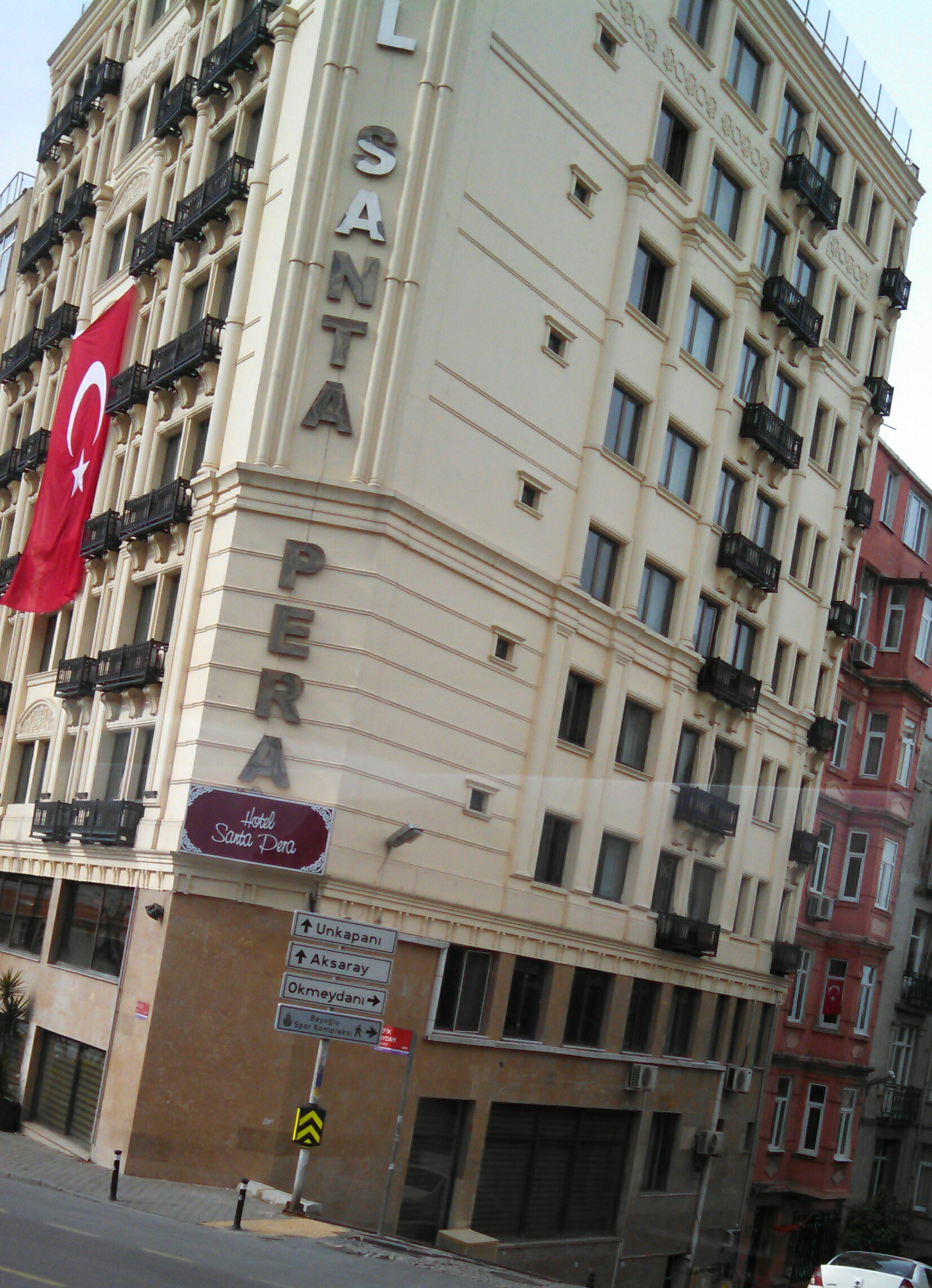
Agatha Christie stayed at the Santa Pera Hotel while writing Murder on the Orient Express. If we ever return to Istanbul, I want to stay there.

The cenotaph, brought by Romans from Egypt, anchored one end of the hippodrome for chariot racing ~19 centuries ago.
The ancient cistern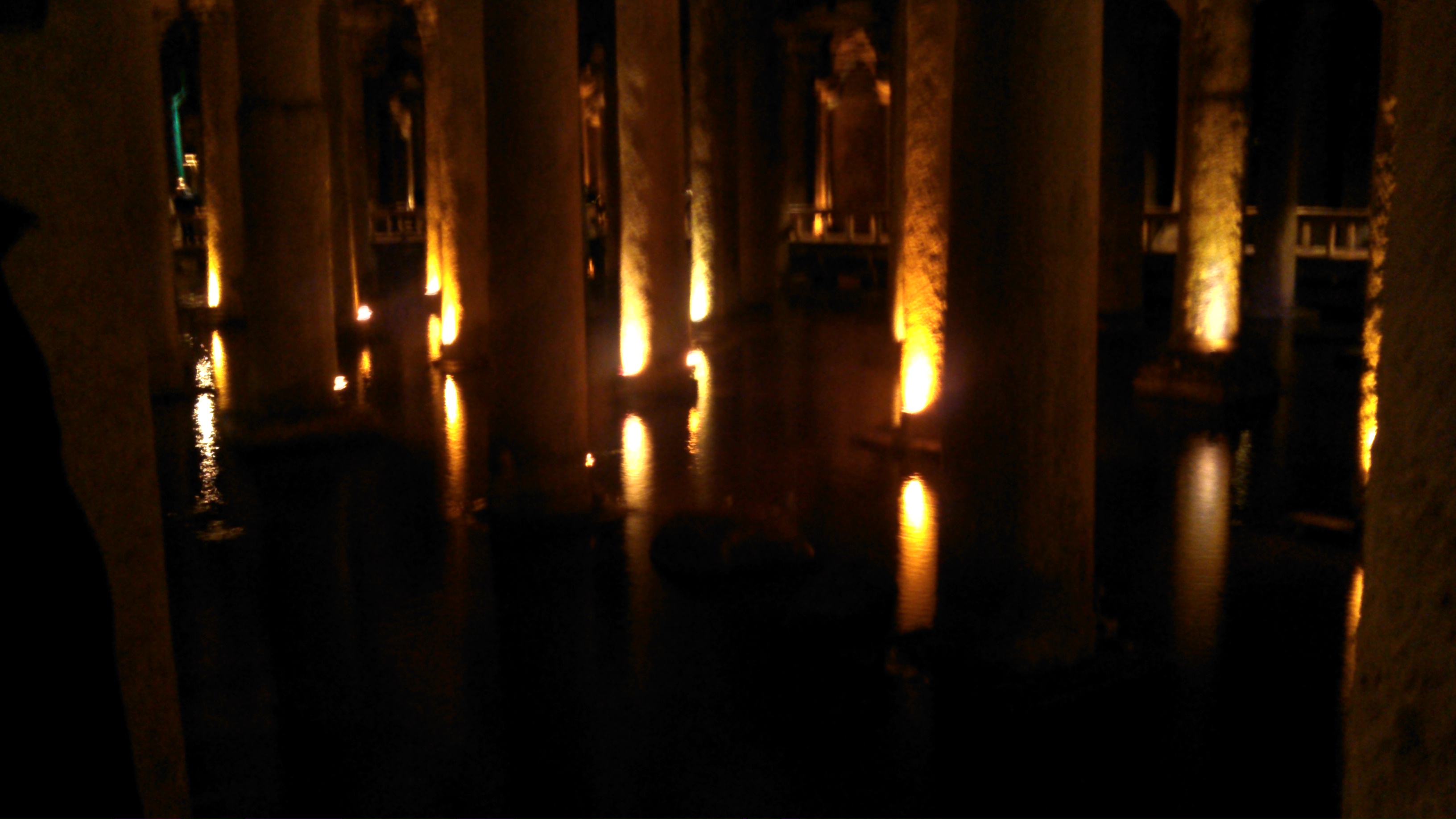
was vast and mysterious, complete with not one, but two sculptured heads of Medusa :


Topkapi Palace was, as you can see, an amazing collage of intricate patterns.
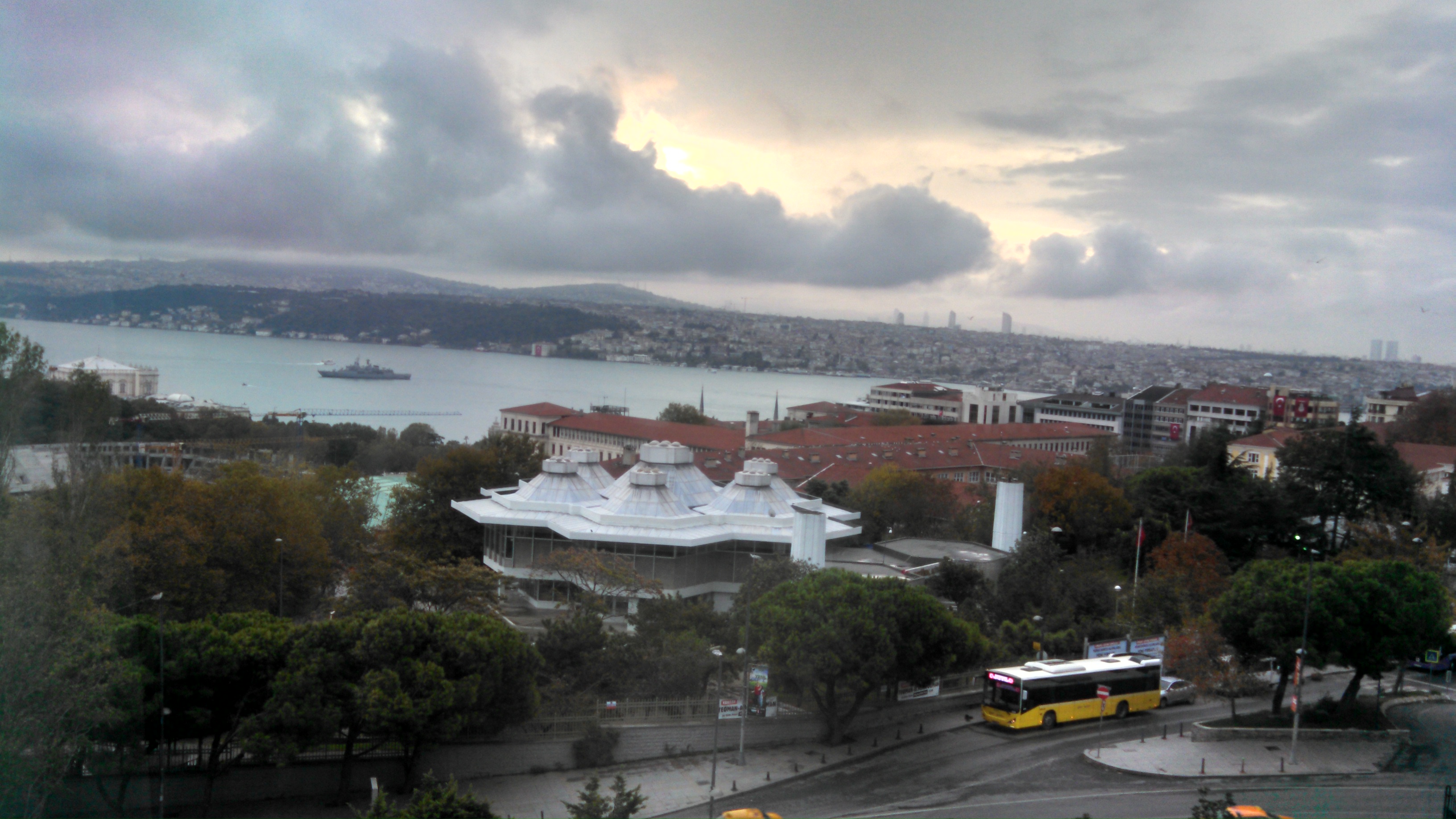
We looked out over the straits of the Bosphorus from our hotel room.
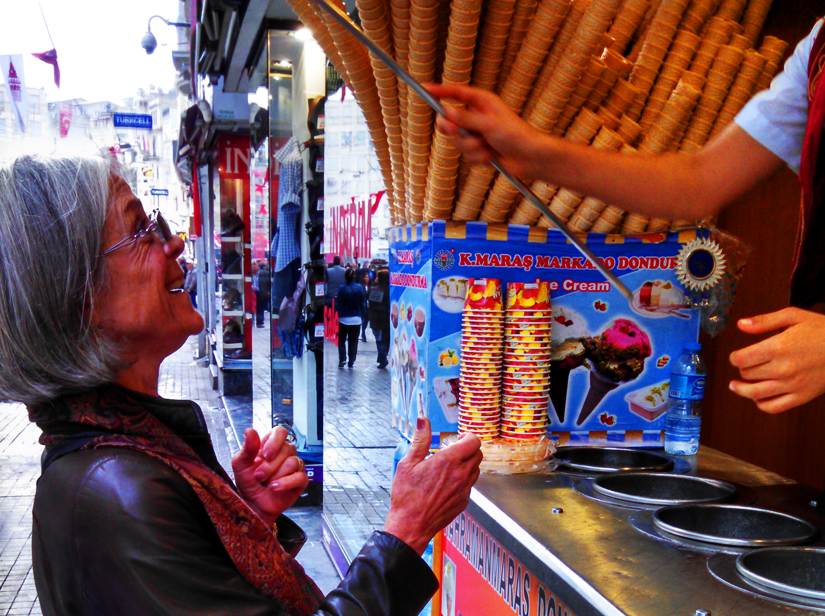 And we were bold enough to walk from the hotel to the tour boat dock. I bought an ice cream cone from the wildly entertaining sleight-of-hand ice cream server who provided entertainment along with dessert.on Tarlabasi Boulevard. We crossed the bridge, where it seemed half the men in Istanbul took advantage of the national holiday to go fishing.
 The boat stopped on the other side of the Bosphorus Strait, so we had the opportunity to walk around in Asian Istanbul as well as European Istanbul.
There was shopping the last afternoon. First, at the dealer of handmade rugs–where we succumbed.

–and at the Grand Bazaar–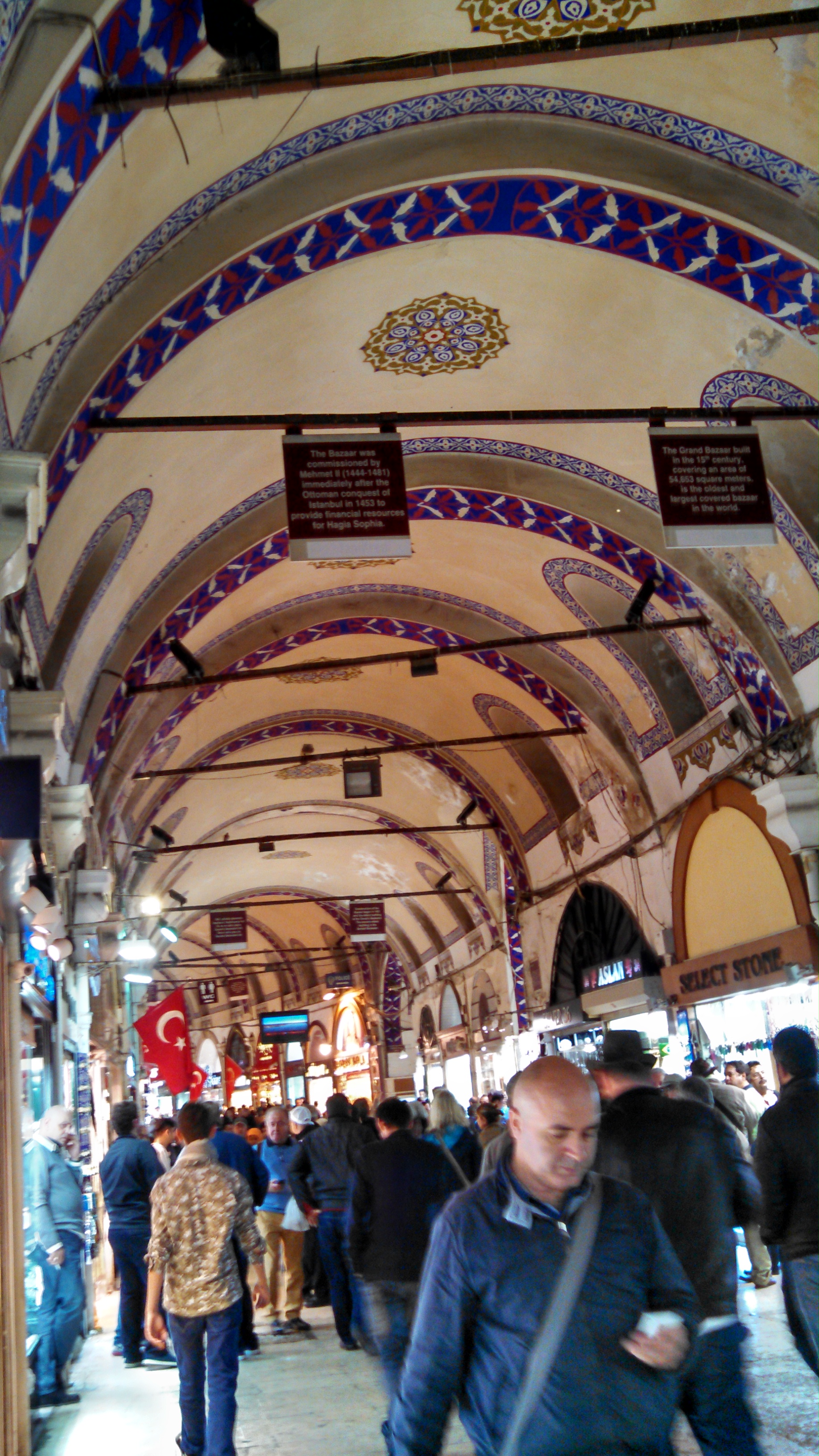
where we limited ourselves to one beautiful hand-painted tile and some preserved fig Turkish Delight.

 illuminate history