
illuminate history
Curiosity: forget “Cherchez la femme” (Look for the woman.) “Cherchez l’histoire.” (Look for the story.)
Headlong into history II
Other fascinating recovered fragments from Delphi:
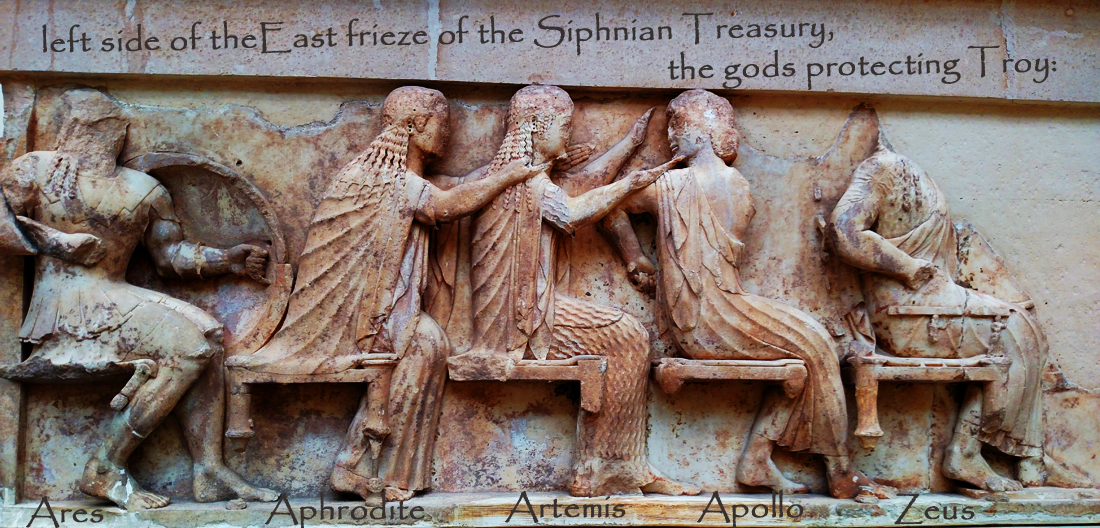
- Portion of a frieze representing the gods who supported Troy: Ares, Aprodite, Artemis
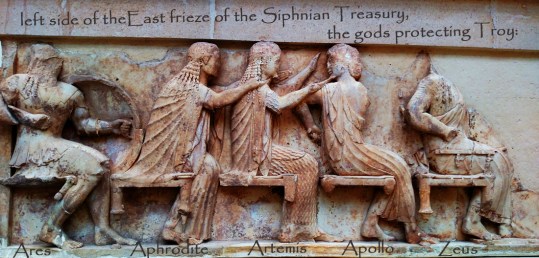 (my favorite, of course, since her Roman name is Diana), Apollo and Zeus.
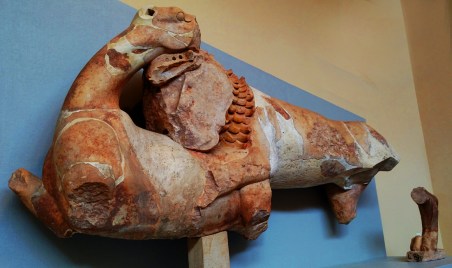
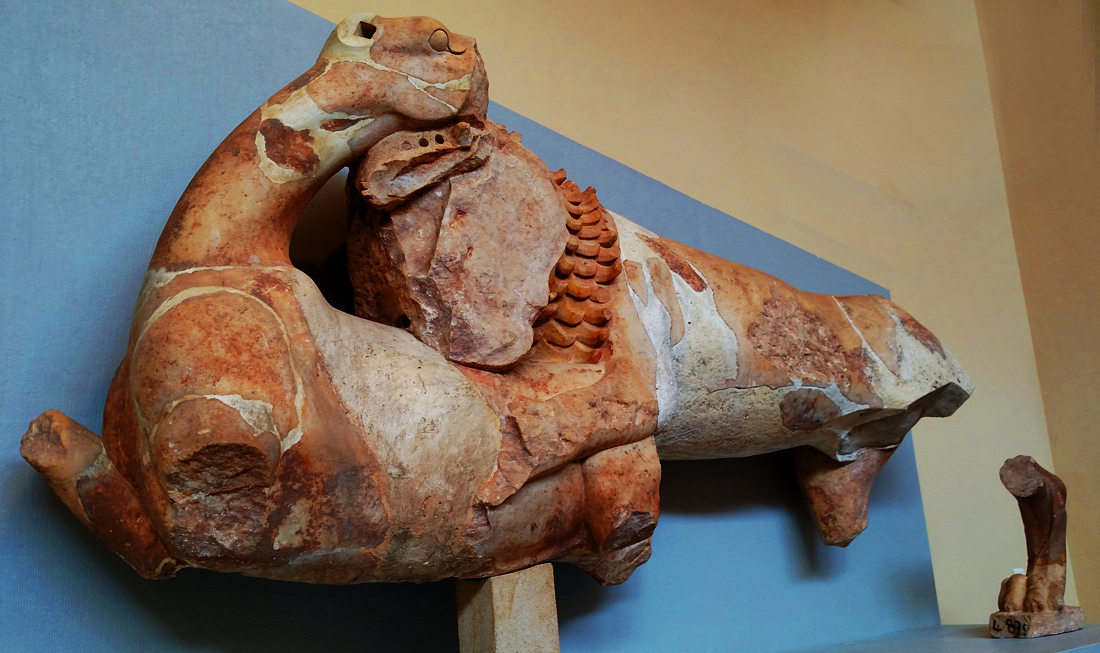
- Reconstructed fragments of a 6th century BC silver-plated copper bull

- Fragment from the East Pediment of the Archaic (8th BC) Temple of Apollo: “a lion mauling a gentle beast”—an antelope, I think.
We go to maritime museums at every opportunity. The Pireaus Maritime Museum beckoned on Day three. We were again swept back almost 2500 years.
 The same Themistocles who built the wall around the Acropolis also consulted the Oracle at Delphi and was given the enigmatic message that the Persians could be defeated by “walls of wood.” Some interpreted this to mean that they should build wooden walls around towns. This did not work: the city of Athens was destroyed.
Themistocles realized that “walls of wood” meant “boats.” He set about building the fleet of 196 triremes that defeated the Persians at the battle of Salamis—which took place just outside the harbor at Pireaus. 2021 will mark the 2500th anniversary of that victory in 480 BC Themistocles’ triremes were vastly outsized and outnumbered by the ships of the Persian fleet. But the triremes were nimble and they featured the first weapon specifically designed for naval battles: the bronze ram.
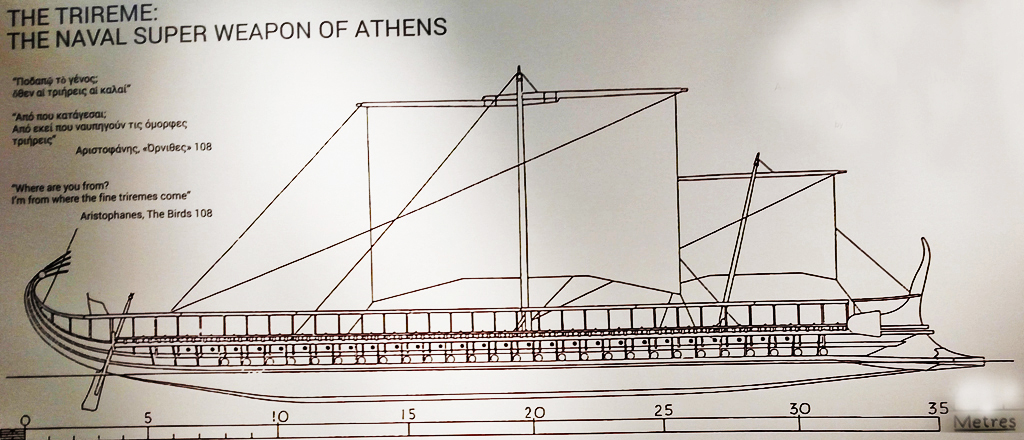
I don’t have all the precise details, but the swift triremes rammed the ships of Xerxes’ fleet at the waterline. The ships sank and the Persians couldn’t swim. Casualties were roughly 4,000 Greeks, 40,000 Persians. “Xerxes returned to Persia in disgust.” (Lonely Planet Greece, 11th Edition)
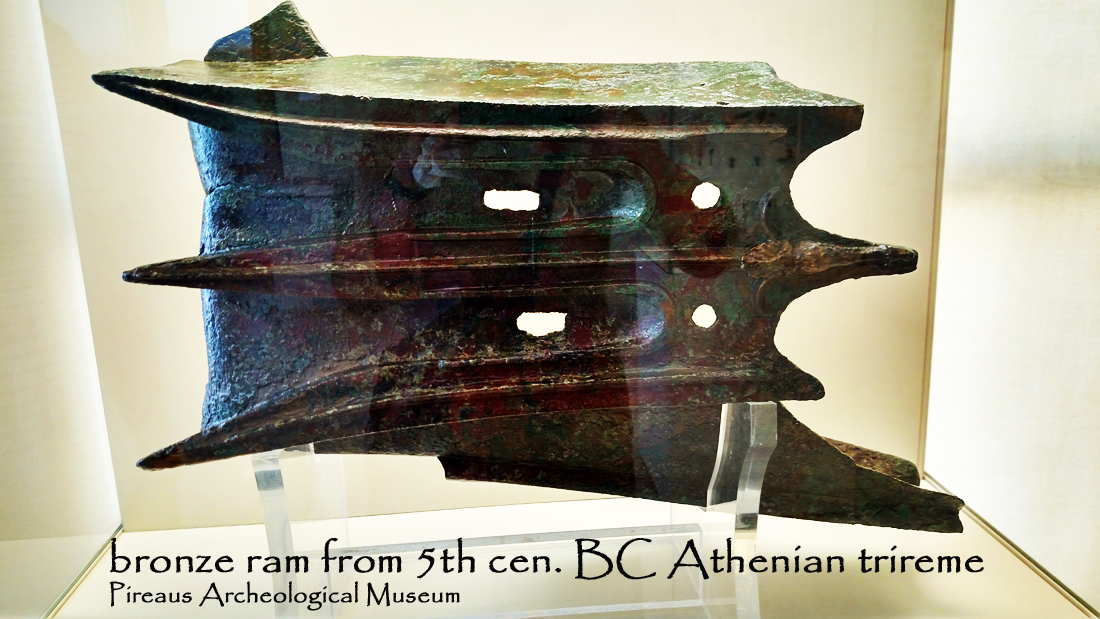
Besides the lethal bronze rams—one of which is preserved at the Pireaus Archeological Museum—I especially like the marble owl eyes that adorned the prow of every trireme.
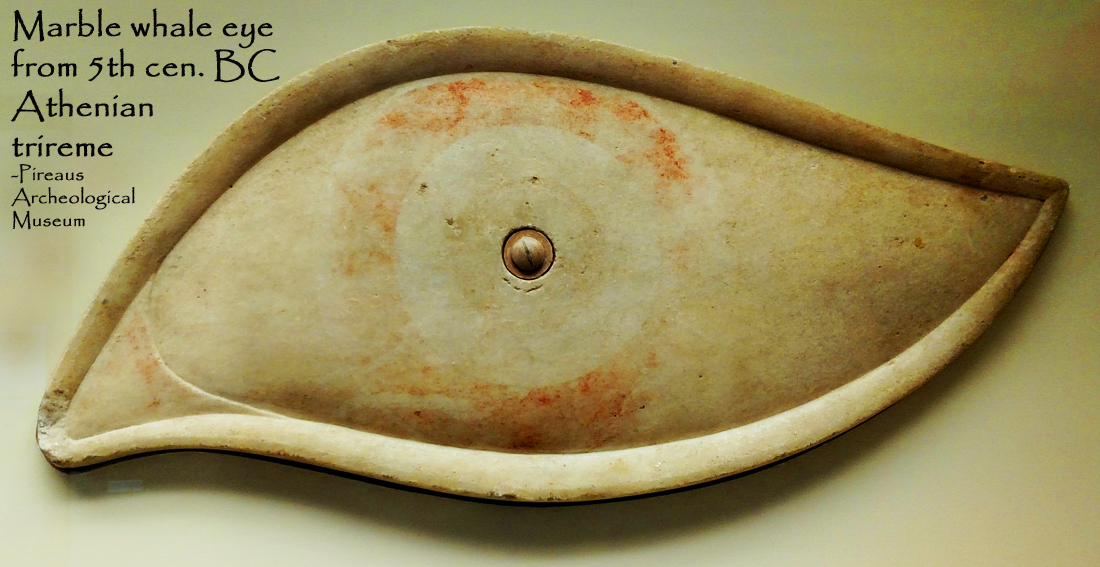
Several days later, at Olympia, our excellent guide, Maria Elena, explained that Athena, who sprang full-grown from the head of Zeus—with no mother—and is always shown in full armor, is not Goddess of War, but Goddess of Knowledge, Virtue, Destiny and Wisdom. Through her wisdom, she would choose the right side in war—which is why the Athenians selected her as their patron deity; even though they were also very dependent on Poseidon, God of the Sea. The Romans called her Minerva and the wise owl is her symbol. Owls can see through the dark, into the future? I’m not sure of the exact spelling, but “glauce” means “blue eye of the owl.” The word “glaucoma” is derived from this word, meaning “seeing through the dark.” Owl eyes on the warships must have been excellent aids to navigation.

Remains of the Temple of Hera at Olympia are the oldest in Greece. The Games began there in the 11th cen. BC as war games, training and competition to keep soldiers fit for fighting.
Sometimes the Greeks repulsed invaders and sometimes they assimilated them: Philip of Macedon and his son Alexander the Great led Greece on a campaign of expansion that extended from Ephesus, Turkey,
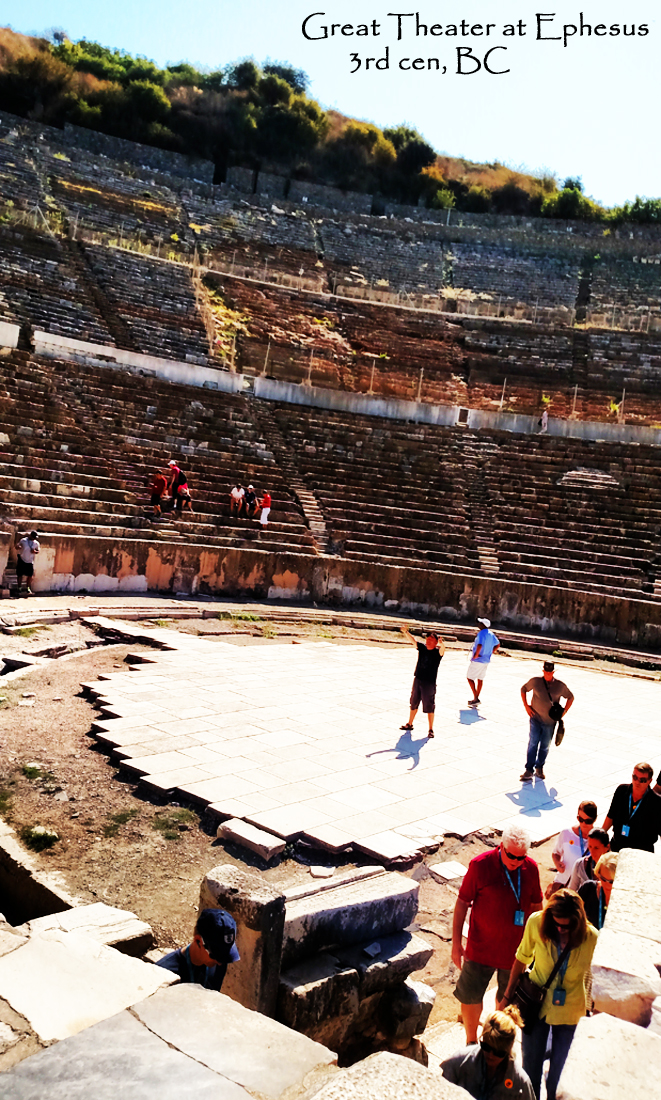
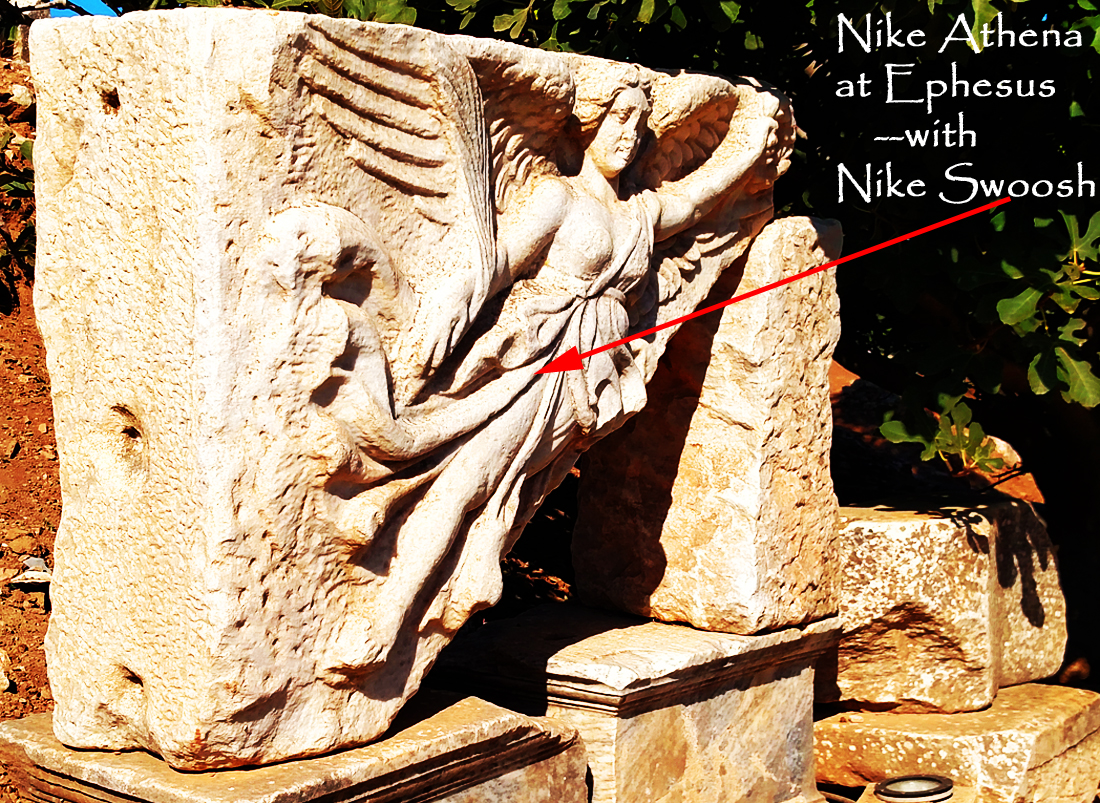
and, eventually, to colonial outposts as far as Nice, France. Sicily and much of Italy was part of Magna Grecia. They took the island of Ischia, then founded Nea Polis (New City), modern day Naples, or as the Italians call it, Napoli as well as Pompeii.
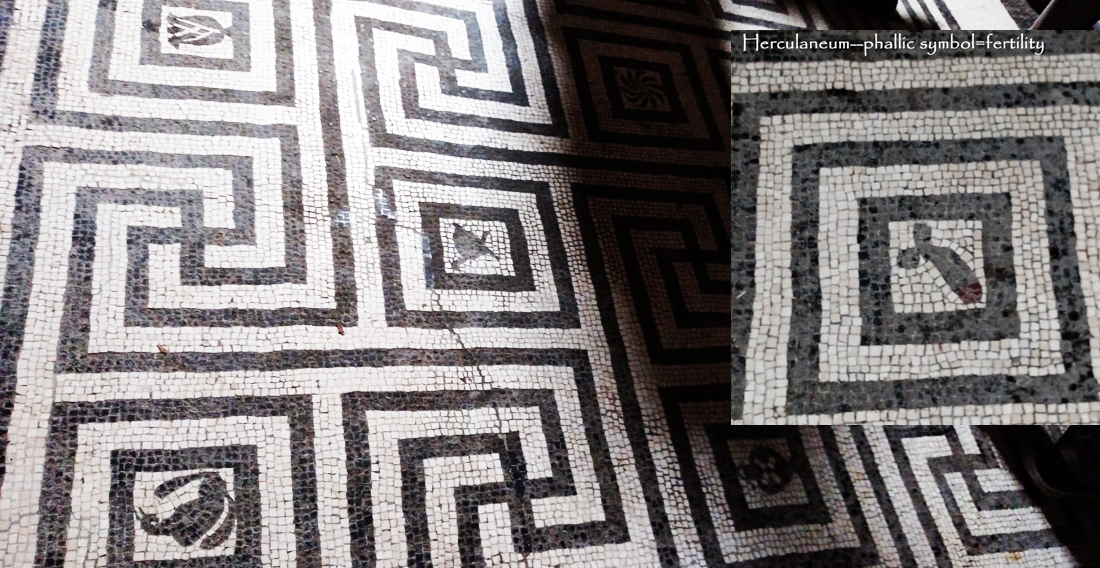
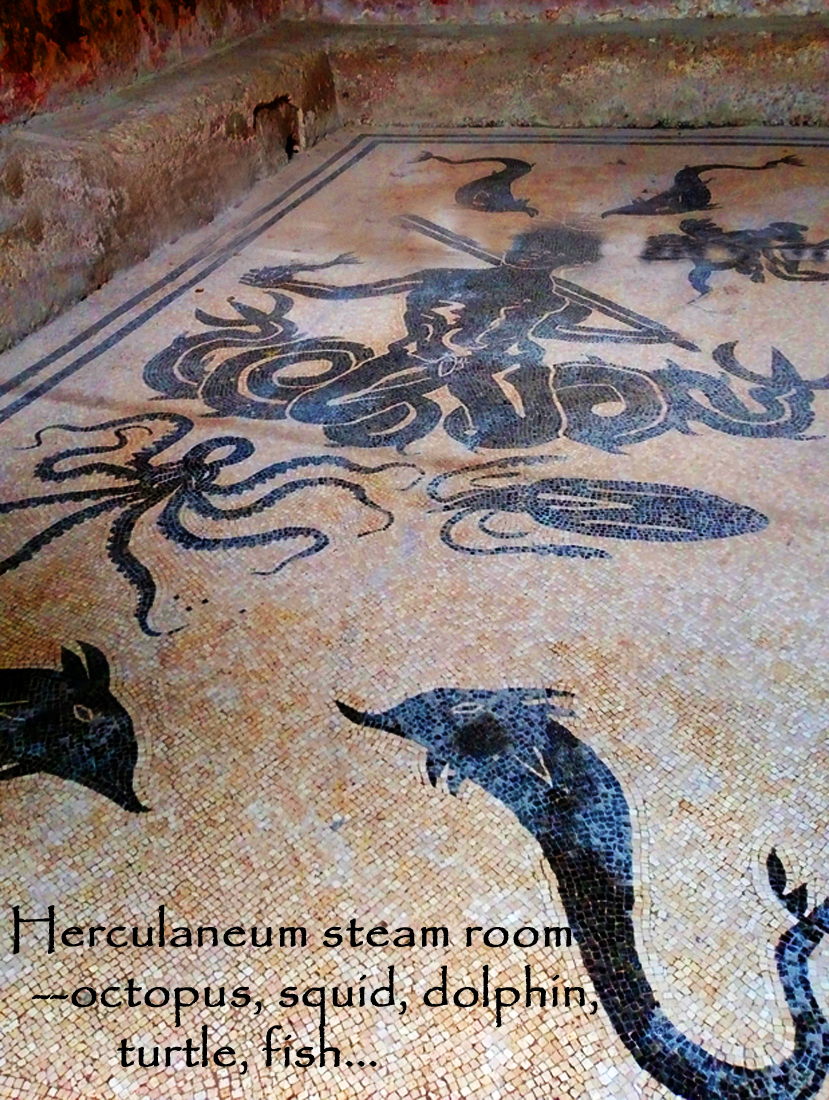
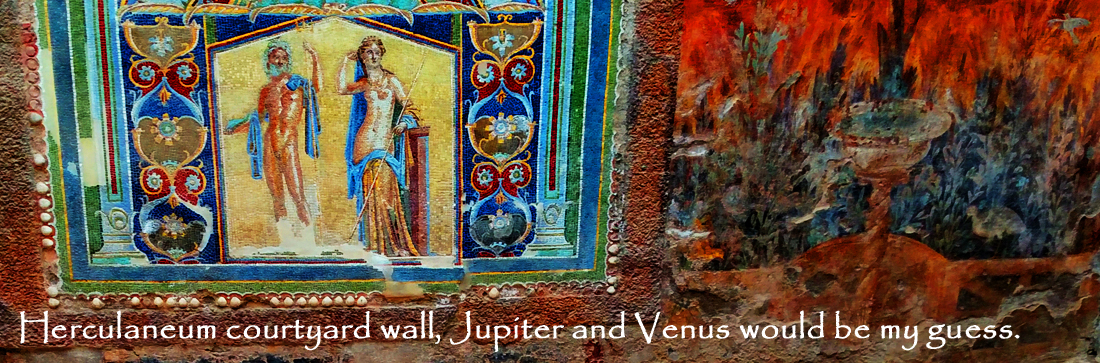
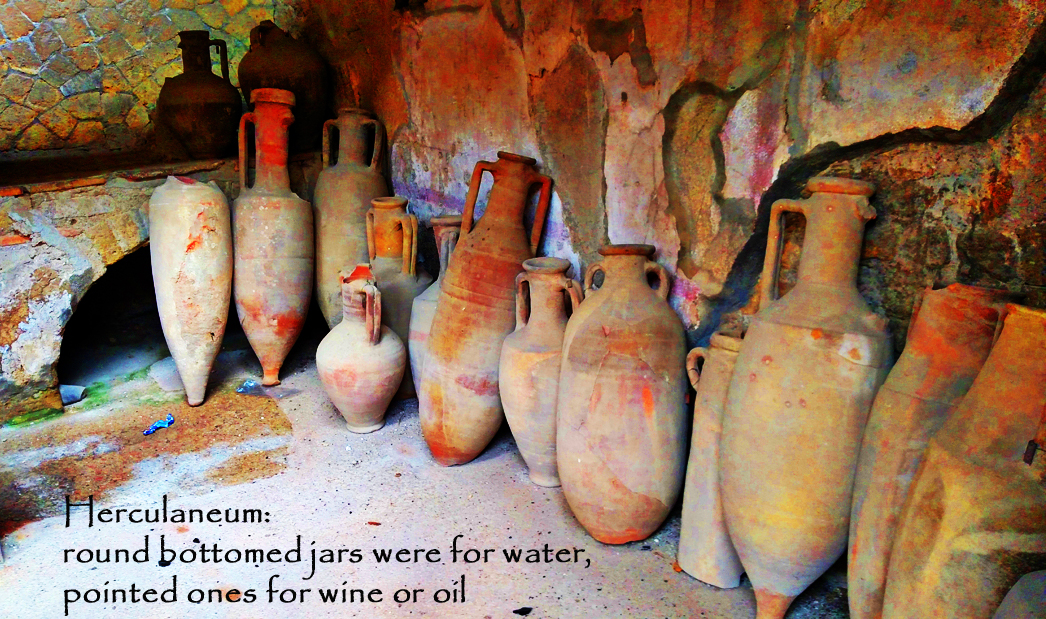
Herculaneum came later–jumping ahead a few centuries, Vesuvius demolished it in, I think, 79AD. It was an upscale seaside resort for wealthy Romans. By the way, Maria Elena also told us that only gods, heroes (like Hercules, who were related to gods), soldiers who died in battle, and victorious athletes were depicted in the nude. Aphrodite/Venus was the only goddess depicted in the nude until after the Christian era.

 illuminate history