
illuminate history
Curiosity: forget “Cherchez la femme” (Look for the woman.) “Cherchez l’histoire.” (Look for the story.)
There is a tide in the affairs of men…
which reminds one to wake up and smell the coffee.
As Gary wrote to his kids that afternoon:
“This is sooo embarrassing! The adventure was a little too intense.
“We left the marina about 9:30am to make sure we got to the Columbia River Bar at about slack tide to avoid rough water. The bar was not too bad but outside it was. We were going through 10-12 foot swells about 100 feet apart. Going up one and crashing down the next. Went about ten miles out before we decided it was going to be too rough all the way to Greys Harbor & turned around.
“By that time one of the ‘non-breakable’ dishes had jumped out of its holder & smashed in the sink; bottles were rolling against the wine cupboard door,causing it to spring open and bang around; the guest cabin closet door was banging; pans slid out from under the cooker and crashed on the floor; water bottles and anything else loose was sliding around and we were rolling so bad I was getting seasick.
“Lots of fun for a couple of hours!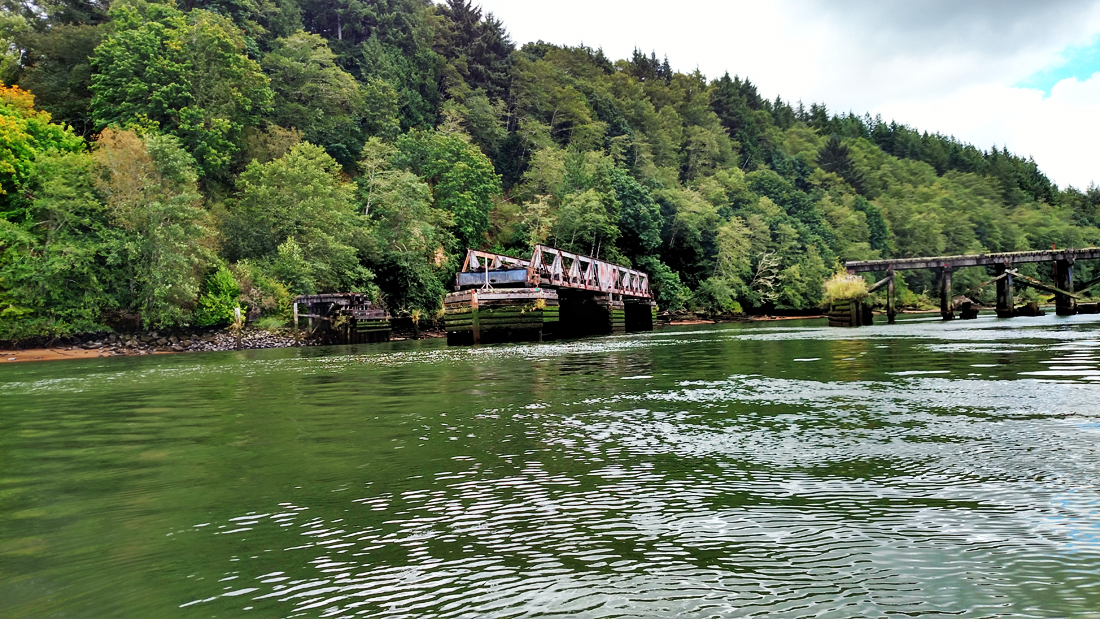
“Now we are anchored in a peaceful lagoon behind Astoria. We both agree we are too old for this stuff anymore.”
There were only three other boats in our peaceful lagoon–the big bay that served as an ‘airfield’ for seaplanes at Tongue Point Naval Air Station during WWII. We anchored near the old Portland & Western railroad bridge across the ‘other’ John Day River.
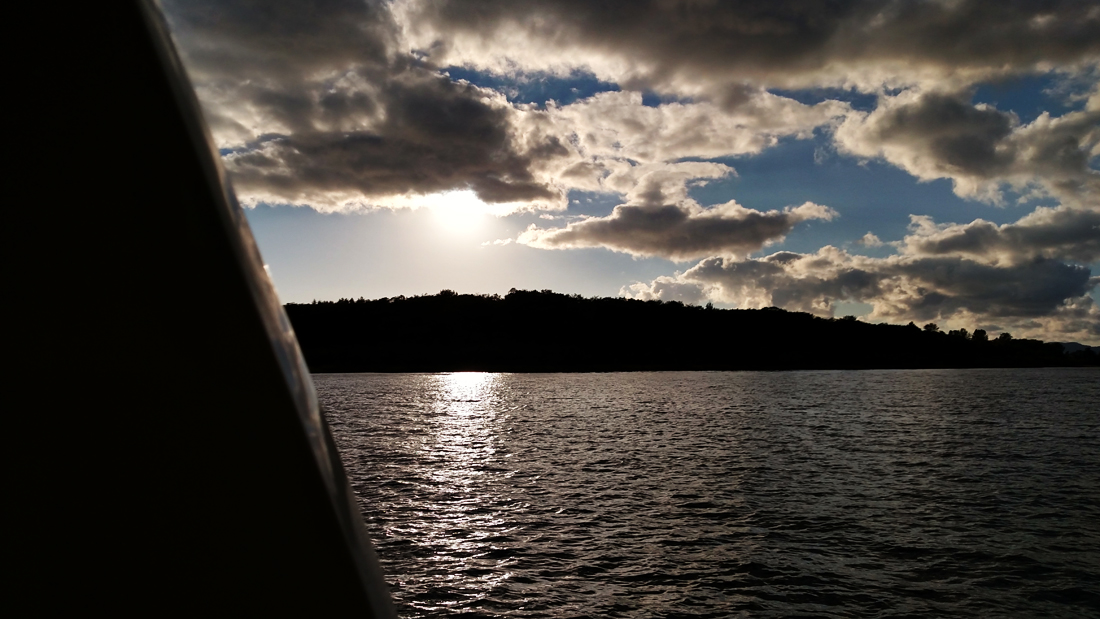
A restful afternoon, light supper aboard and a placid evening suit us just fine.
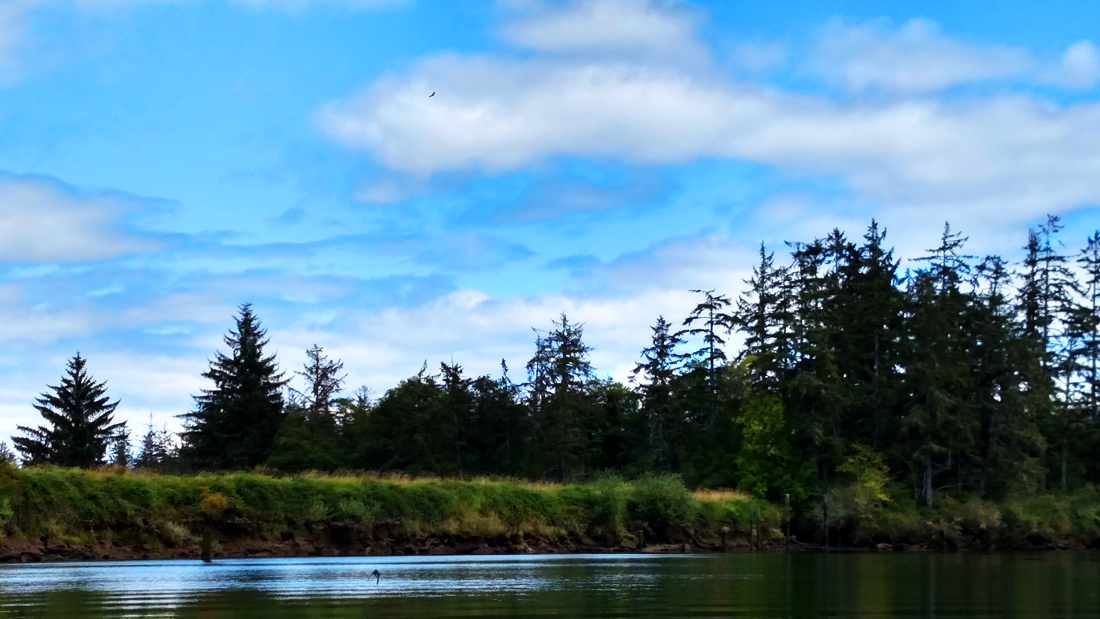
We spotted several bald eagles while exploring the John Day River by dinghy the next morning. The black speck silhouetted against the center cloud is one of them.
John Day, by the way, was a trapper born in Virginia in 1770. He followed Lewis & Clark by a few years, was apparently captured and tortured by Indians in eastern Oregon, hence the John Day River into the Upper Columbia and many John Day place names there. He made it to the Lower Columbia and was supposed to return east with a fellow trapper, but was thought to be insane. Several death dates were recorded, the real one seems to be ~1819-1820.
On our second glorious evening…
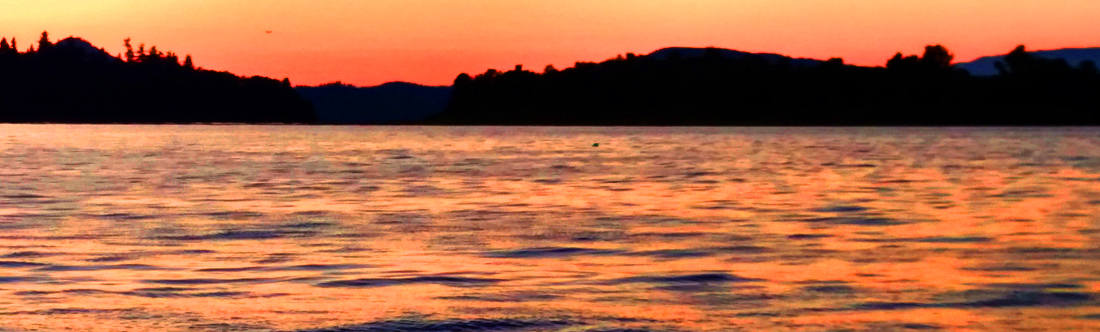
we celebrated our new approach to boating by setting off three sky lanterns we got at the Maritime Heritage Festival in St. Helens last August.
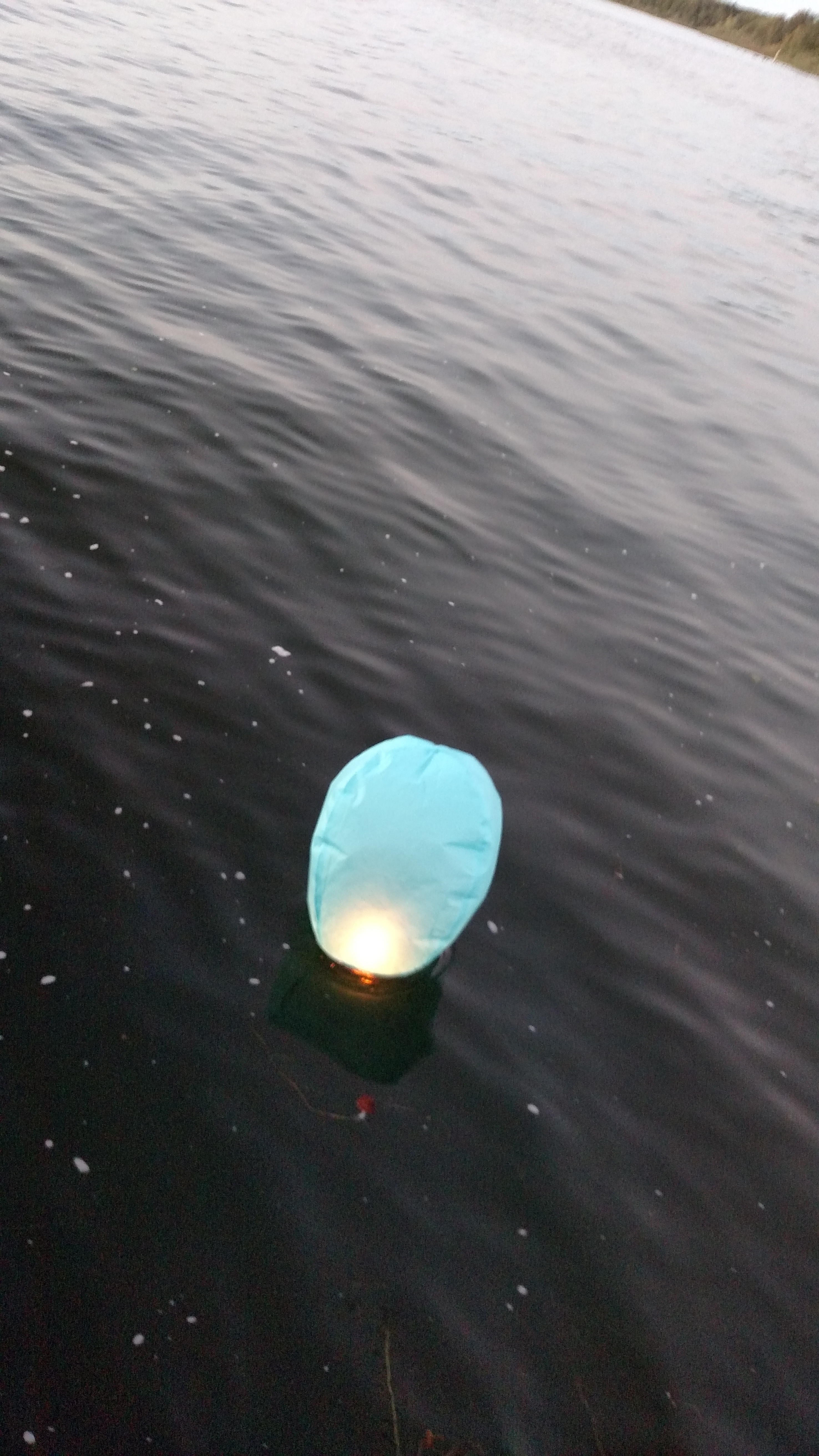
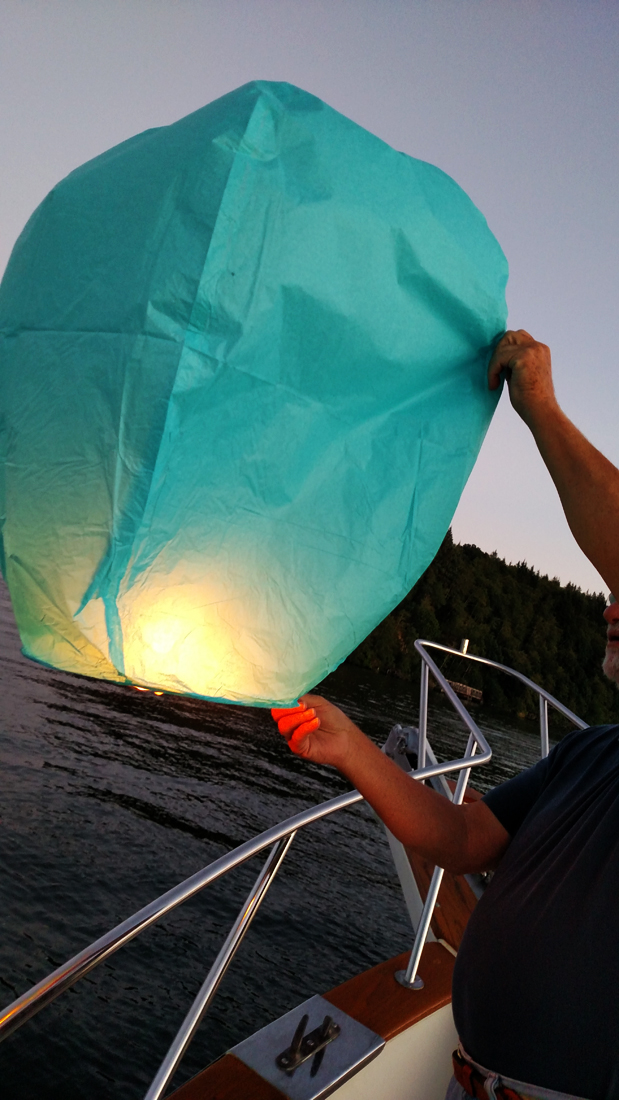
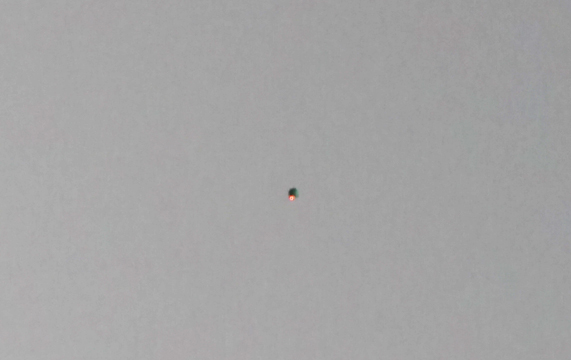
It took a couple of tries before the third one soared up into the sky.
I was well into reading Troubled Sea, by Jinx Swartz when we left on this trip. It’s a funny, suspenseful story about the wild adventures of a couple on a trawler in the Sea of Cortez, with lots of boating details that seem very familiar. She writes about people who retire, buy a boat with all the latest electronic navigation aides and set out to cruise to the Sea of Cortez, sometimes with disastrous results. That ain’t us.
Instead, we take more to heart the quotation with which she begins Chapter 18: “When you can make your journey by land, do not make it by sea.–Apostolius” (I learned on Wikipedia that Apostolius was “a Greek teacher, writer, copyist and proverb-writer, who lived in the fifteenth century.”)
We shall go to Canada to visit our friends in Victoria and see the small town of Uclulet on the west coast of Vancouver Island, but we shall go by car.
 illuminate history
Great descriptions of a very stressful experience with a happy ending !
What a great and memorable wild adventure, with a serene coda! Thanks for the interesting history lessons and beautiful photos too.